First Impressions
Every World Cup ball carries a burden: it has to satisfy players, referees, broadcasters, collectors, and the millions of kids who'll kick a replica around their backyard for the next four years. The Adidas Trionda, the official match ball of the 2026 FIFA World Cup, is Adidas's answer to all of those audiences.
And honestly? They might have nailed it.
The name "Trionda" references the tournament being hosted across three nations (USA, Mexico, Canada), with "onda" meaning "wave" in both Spanish and Portuguese. The design runs with that concept hard, and it pays off. If you're gearing up for the tournament, check out our complete guide to the USA as host nation for more on what to expect from the three-country setup.
Design
The "La Ola" Pattern
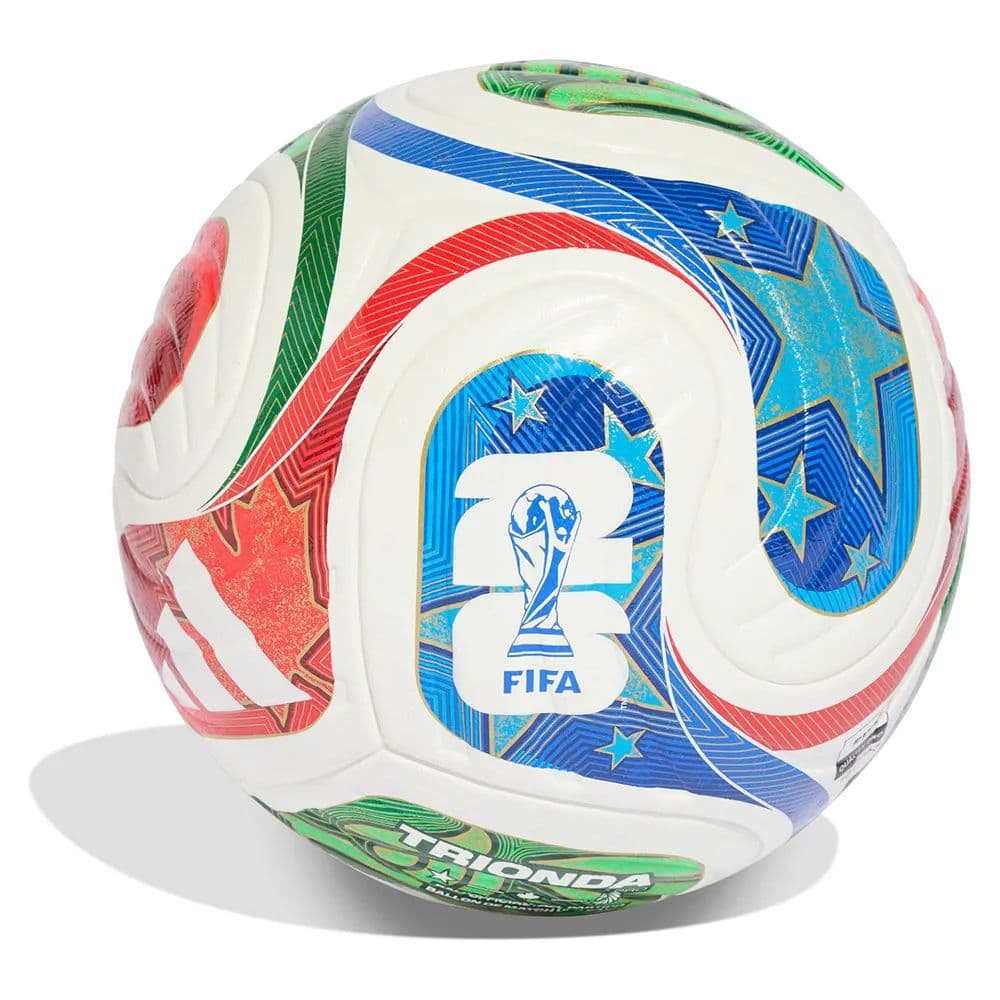
The ball's surface features a flowing wave pattern in red, blue, and green that wraps around the entire sphere. The colors represent the three host nations' flags, and the wave motif captures the "la ola" (the wave) that sweeps through stadiums during matches.
What makes it work visually is the gradient technique. The colors don't just sit in blocks. They blend and flow into each other, creating movement even when the ball is stationary. On camera, during fast play, the pattern creates a distinctive visual signature that makes the Trionda instantly recognizable. TV producers will love it.
The base is white (as it should be for visibility), and the panel lines are almost invisible thanks to the thermal bonding process. The overall look is modern without being gimmicky, which is exactly where a World Cup ball should sit. In terms of design ambition, the Trionda holds its own alongside the best jerseys of the tournament.
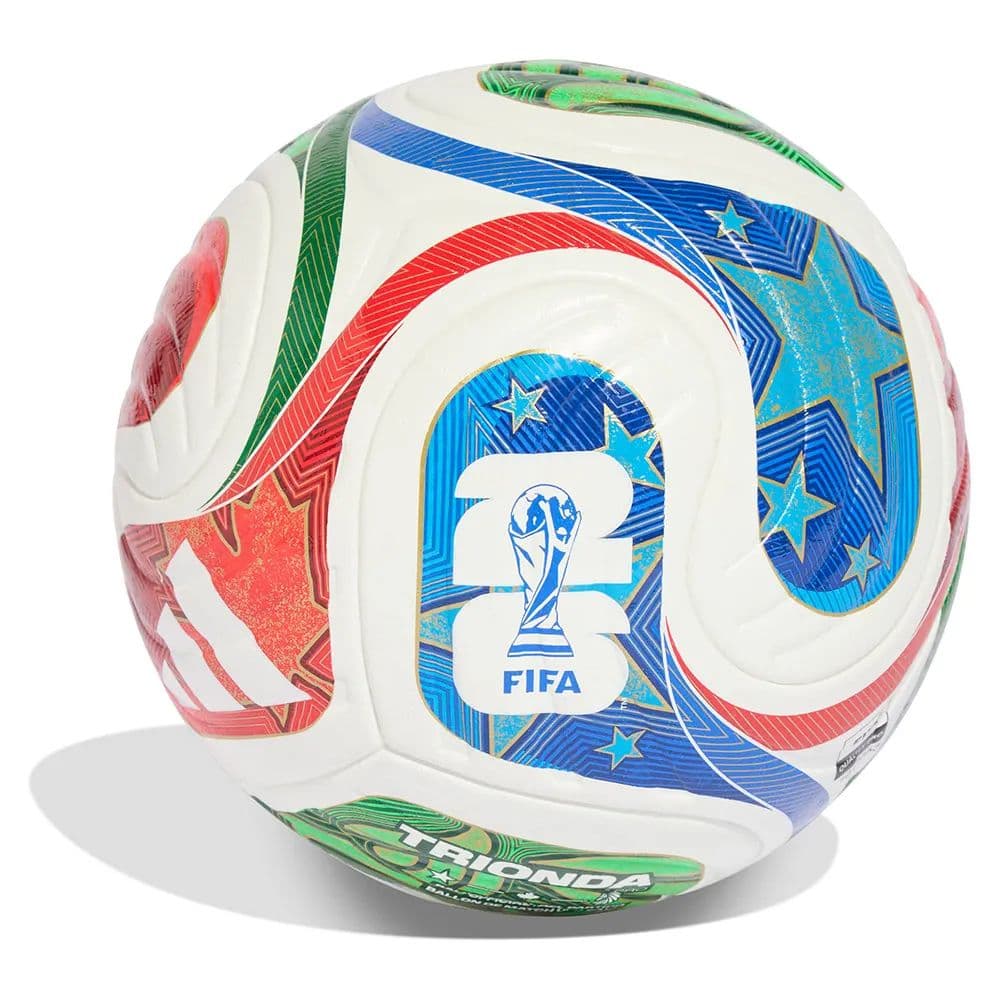
FIFA World Cup 2026 Official Match Ball
The official Adidas Trionda match ball for the 2026 World Cup. Thermal bonded seamless surface with textured design.
Technology
Thermal Bonded Surface
Like its predecessors, the Trionda uses a smooth thermal bonded construction with no stitching. The panels are fused together at high temperature, creating a perfectly even surface. This matters for consistency: every touch, every strike, every save feels the same regardless of where on the ball you make contact.
The panel configuration is new for 2026. Adidas moved to a 14-panel design (up from the Al Rihla's 20 panels in 2022) with larger, more flowing shapes that follow the wave pattern. Fewer panels means fewer seams, and fewer seams means a truer flight path.
CTR-CORE
The bladder uses Adidas's CTR-CORE technology, which features a centrally located inertial measurement unit (IMU) sensor. This chip communicates with VAR systems in real time, tracking position, speed, spin rate, and whether the ball has fully crossed the goal line.
For the 2026 tournament, the sensor has been upgraded to transmit data 500 times per second (up from 200 in 2022), giving officials more precise information for tight offside calls and goal-line decisions. Whether you love or hate VAR, the technology inside this ball is impressive. You can read more about how the connected ball tech works on the Adidas site.
Surface Texture
Micro-textured panels with a slightly rough grip surface. Adidas calls it "Speedshell 2.0," and it's designed to maintain consistent aerodynamic properties in both wet and dry conditions. Given that matches will be played everywhere from the altitude of Mexico City to the humidity of Miami, this consistency matters.
Goalkeepers we've spoken to say the ball feels "honest" in the air. It doesn't knuckle unpredictably like the infamous Jabulani (2010) or dip erratically like the early versions of the Brazuca (2014). It moves in ways that make sense based on how you strike it, which is all anyone can ask for.
How It Compares to Previous World Cup Balls
vs. Al Rihla (Qatar 2022)
The Al Rihla was a solid ball that mostly avoided controversy (a low bar after some previous tournaments). The Trionda improves on it in two key areas: the flight is more predictable at speed, and the surface texture holds up better in wet conditions. The design is also more eye-catching, though that's subjective.
vs. Telstar 18 (Russia 2018)
The Telstar 18 was a nostalgia play, referencing the classic black-and-white Telstar from 1970. It looked great but played slightly inconsistent in early tournament matches before players adjusted. The Trionda is the better ball technically, no question. Visually, it depends on whether you prefer retro or contemporary.
vs. Jabulani (South Africa 2010)
We bring this up only because every World Cup ball review has to address the Jabulani question. That ball was genuinely problematic, with unpredictable movement that frustrated players throughout the tournament. The Trionda is a completely different beast. Modern thermal bonding, better surface texture, and smarter panel geometry mean the days of wildly knuckling World Cup balls are behind us. FIFA's official technical reports go deeper into the testing standards if you want the full picture.
Playing With It
We got time with a Trionda on a grass pitch, and a few things stood out immediately.
The weight distribution feels centered and balanced. When you strike it cleanly, the feedback through your foot is crisp and satisfying. Volleys have a predictable trajectory. Driven passes stay where you aim them. Free kicks take spin well without over-curving.
The surface grip is noticeable in the hand (relevant for throw-ins and goalkeepers). It's not sticky, but it has more tack than a standard training ball. In light rain, the grip held up well enough that handling didn't become a guessing game.
If we're being picky, the ball feels marginally lighter than the Al Rihla at first touch, though both meet the same FIFA weight specifications. It might just be the improved weight distribution creating that impression.
The Replica vs. Official Match Ball
The official match ball retails around $169.99 and includes the connected ball sensor, thermal bonded construction, and premium surface texture. The training replica at $39.99 uses machine stitching and a simpler bladder but keeps the same visual design.
For collectors and serious players, the official ball is worth the investment. For park kickabouts and display purposes, the replica captures the look at a fraction of the cost.
Our rating: 9/10. The Trionda is the best World Cup match ball in at least a decade. The flight characteristics are predictable and fair, the connected technology is a genuine step forward for officiating, and the wave design is eye-catching without sacrificing function. Adidas set the bar high with this one.
Frequently Asked Questions
How is the Trionda different from the Al Rihla used in Qatar 2022?
The Trionda uses a 14-panel design compared to the Al Rihla's 20 panels, resulting in fewer seams and a truer flight path. The CTR-CORE sensor now transmits data 500 times per second, up from 200. Surface texture has also been upgraded with Speedshell 2.0 for better wet-weather performance.
Is the Trionda replica worth buying, or should I get the official match ball?
It depends on what you need it for. The official match ball ($169.99) includes the connected sensor and thermal bonded panels, making it ideal for serious players and collectors. The replica ($39.99) keeps the same visual design but uses machine stitching, which is perfectly fine for casual use and display.
Does the Trionda have the same knuckling problem as the Jabulani?
No. The Jabulani's unpredictable movement came from its panel design and surface texture. The Trionda's 14-panel configuration, updated surface grip, and modern thermal bonding give it a stable, predictable flight. Goalkeepers we've spoken to describe it as "honest" in the air.
What does the CTR-CORE sensor actually do during a match?
The sensor sits inside the bladder and tracks the ball's position, speed, and spin rate in real time. It communicates directly with VAR systems to help officials make offside and goal-line decisions. For 2026, the data refresh rate has been more than doubled compared to the 2022 version.
How does the Trionda's design connect to the three host nations?
The name combines "tri" (three) with "onda" (wave in Spanish and Portuguese). The flowing wave pattern uses red, blue, and green to reference the flags of the USA, Mexico, and Canada. The "la ola" motif also nods to the stadium wave that fans perform during matches. For a preview of the opening matches across all three countries, see our group stage guide.
All products linked in this review are available through our affiliate partners. See our disclosure for details.
FanFace Editorial
As an Amazon Associate, we earn from qualifying purchases.
Related Articles
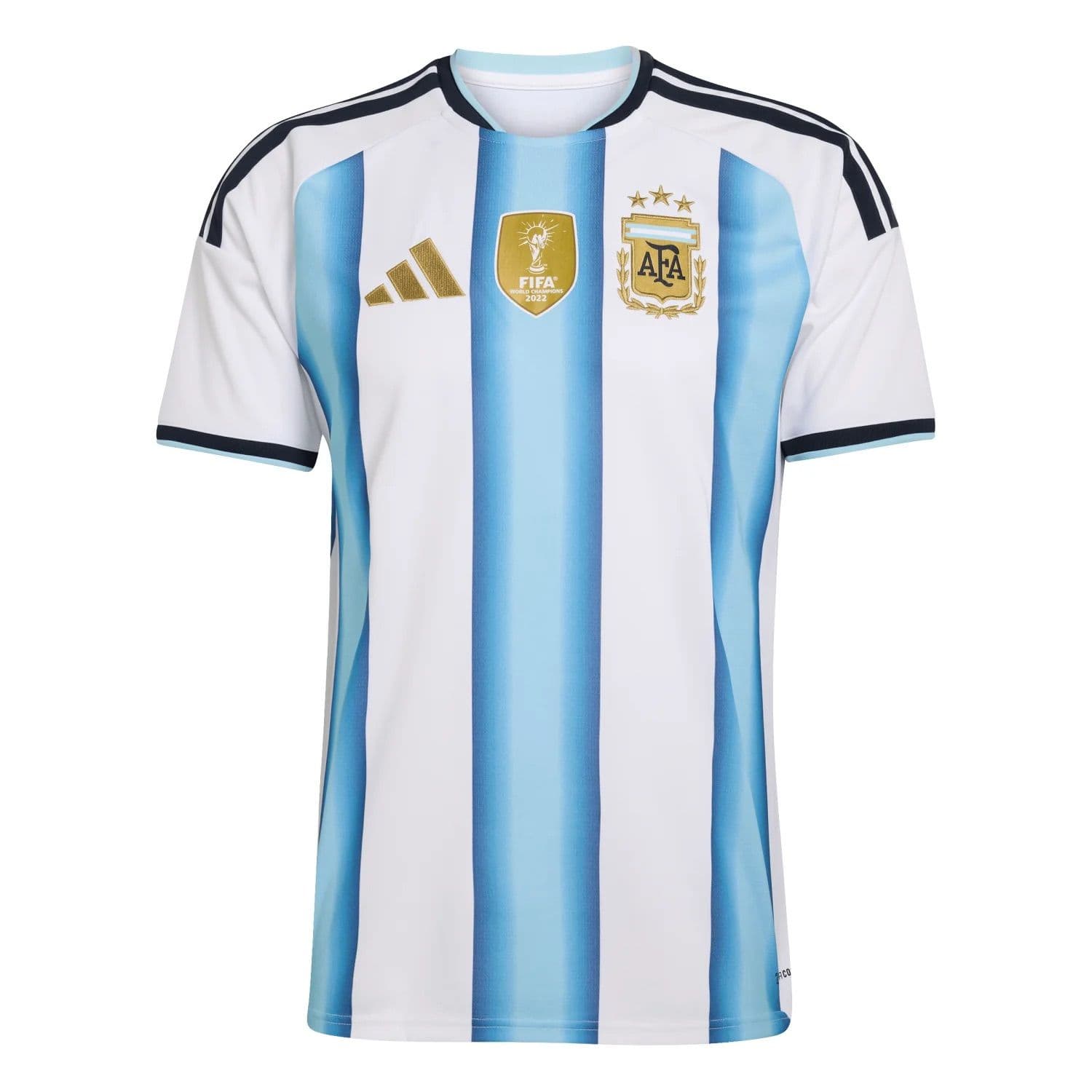
Argentina Home Kit 2026 Review: The Champions' Stripes
A detailed review of Argentina's Adidas home jersey for the 2026 World Cup. The defending champions get a kit worthy of their status.
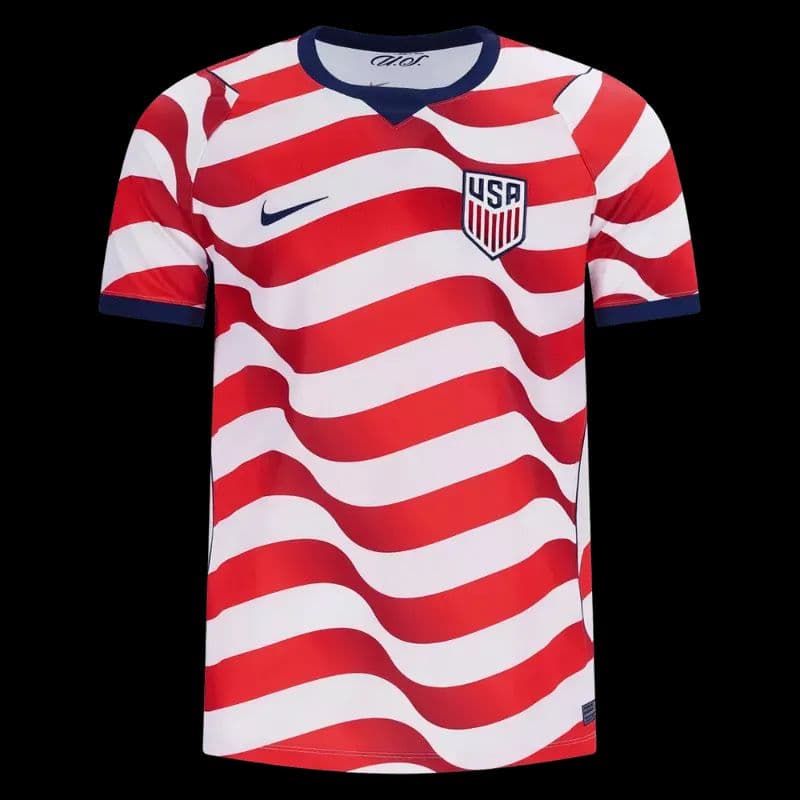
USA Home Kit 2026 Review: The Host Nation's Bold Statement
Nike went all-in on the USA's World Cup 2026 home jersey. Here's our full breakdown.
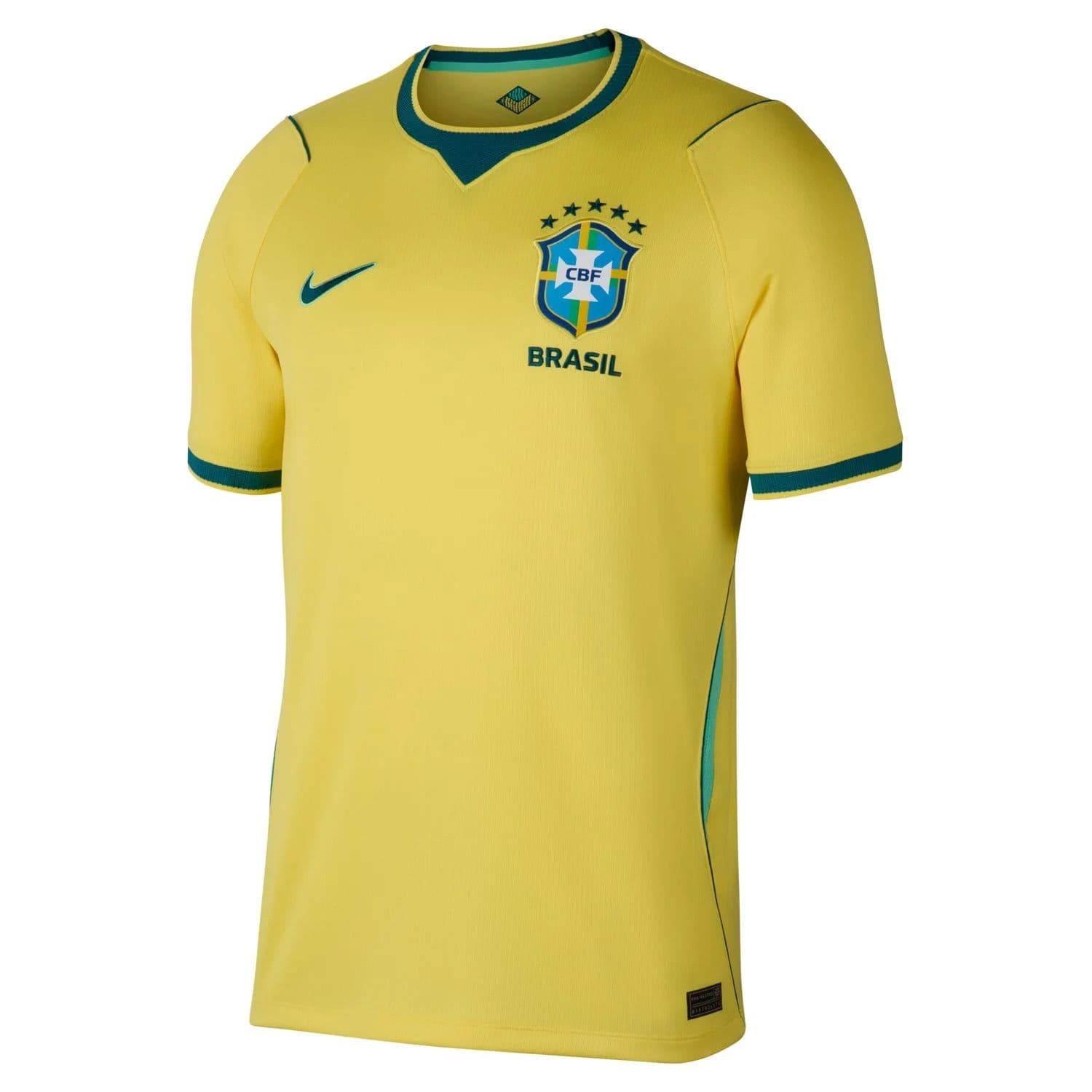
Brazil Home Kit 2026 Review: The Canarinho Returns
Full review of Nike's Brazil home jersey for the 2026 World Cup. Design, comfort, and where to buy.